Would a Real Homesteader Use AI?
Some people think a real homesteader would never touch AI. Homesteading is about doing things yourself, the old way, with your own two hands. So why would anyone bring a chatbot into it?
It’s a fair question. But look at what the original homesteaders actually did, and you get a different answer.
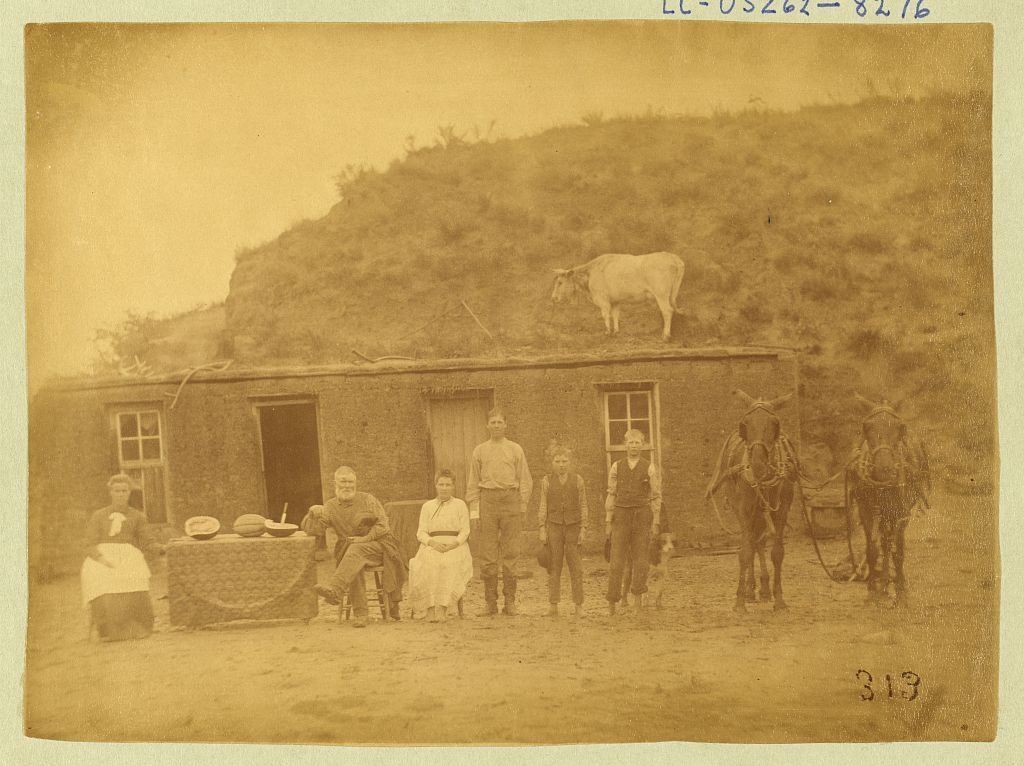
The settlers learned the hard way
The people who went west in the 1840s and 1850s, and the homesteaders who claimed land after the Homestead Act of 1862, brought basic skills. They learned the rest by trial and error, and some of those errors were costly.
Plowing was a good example. The sticky, root-filled prairie soil clung to older plows. In 1837 an Illinois blacksmith named John Deere built a plow that could handle it. The cutting edge, called the share, was steel, and the moldboard was polished so smooth the soil couldn’t stick. Historian Edward Kendall notes that for about 15 years the moldboards were actually wrought iron. The steel share and the polish were what made it work (Kendall, John Deere’s Steel Plow). The oldest surviving one, from 1838, is now at the Smithsonian.
Out on the plains there was no lumber, so homesteaders cut prairie sod and built houses from it (South Dakota State Historical Society). There was no firewood either, so they burned corn cobs, sunflower stalks and twisted hay. Some even rigged up “hayburner” stoves that fed hay into the fire with a spring (Nebraska History). An old song about it goes: “I little thought that I’d come down / To burning twisted hay.”
They used the best tools they could get
When a new tool solved a real problem and they could afford it, settlers picked it up. Barbed wire spread in the 1870s and let people fence land that had no timber for rail fences (USDA history timeline). Windmills pumped well water where rain wasn’t enough. By the turn of the century, the National Park Service says, “windmills stood sentinel over most plains farms” (Homestead National Historical Park).
Not everybody got the newest thing right away. Money was tight. Some homesteaders found it cheaper to make their own wire, and plenty picketed their animals on ropes because they couldn’t fence at all. The honest version is that they used the best tools they could get and make work, and they improvised the rest.
And they were hungry for knowledge
This is the part people forget. Settlers didn’t just rely on what Grandpa told them. They went looking for information.
- Guidebooks. Captain Randolph Marcy’s The Prairie Traveler (1859) told emigrants how to load a wagon, whether to choose oxen or mules, and how to pack flour and bacon so they’d last.
- The government. The USDA was founded in 1862, the same year as the Homestead Act. It put out its first research bulletin that year and its first monthly crop report in 1863 (USDA ARS timeline).
- Each other. The Grange formed in 1867 so farmers could share what they knew.
- Catalogs. Montgomery Ward’s first mail-order catalog came out in 1872 (Farm Collector). Rural Free Delivery started in 1896 and brought newspapers, magazines and catalogs right to the farm (USPS history).
- Extension agents. In 1914 the Smith-Lever Act set up a national extension service to carry university knowledge out to farms.
From almanac to extension agent to AI: the newest way to know.
So would a real homesteader use AI?
We think the settlers would have. Not because it’s new and shiny, but because it does something they badly wanted: it puts a lot of knowledge within reach, fast. It can research a question, explain it in plain words, organize a plan and suggest ideas you hadn’t thought of.
They also would have been careful with it. A guidebook could be wrong. A catalog could oversell. AI can be wrong too, and confidently so. That’s why we lead with what AI gets wrong, and why every guide here ends with a place to check the answer.
What doesn’t change
AI doesn’t plow, can or milk. It doesn’t build skill in your hands. That still takes practice, patience and a few mistakes of your own. But you can skip the mistakes others have already made and reduce the cost of learning on your own.
Settlers used the best tools they could get. So can you.
Check it here
- NPS: Windmills on the American Plains
- USDA: A Condensed History of American Agriculture
- Library of Congress: photo of the 1838 Deere plow
Print it
[DOWNLOAD PLACEHOLDER: one-page “Then and Now” timeline, from guidebook (1859) to USDA (1862) to Grange (1867) to RFD (1896) to extension (1914) to AI]