Sizing a Rain Barrel System With AI (and When to Call a Pro)
Water comes first on every homestead. A few rain barrels under the downspouts are one of the easiest first steps toward self-sufficiency, especially for the garden. The sizing is one line of math, and it’s right below. AI can help with the planning and the checklist if you want. It can’t tell you whether your water is safe to drink or whether your county allows it.
The job
Figure out how much rain you can catch, how many barrels make sense, and where the plan needs a professional.
The basic formula (check it yourself)
One rule of thumb for roof catchment is: gallons ≈ length (ft) × width (ft) × rainfall (inches) × 0.623. That 0.623 converts cubic feet of rain on a flat footprint into gallons. Real systems lose some water to first-flush diversion, splash, and imperfect seals, so treat the number as a ceiling, not a promise.
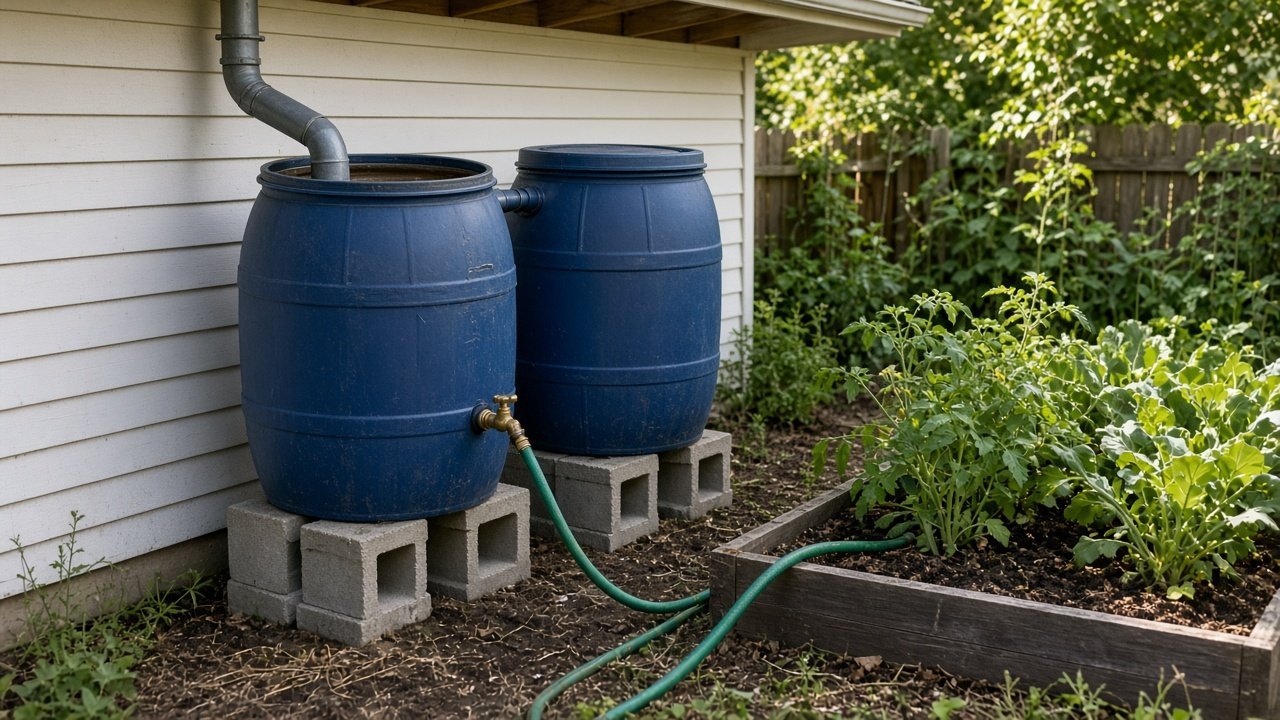
Example shape (use your own roof and rainfall): a 20 × 12 foot section and a one-inch rain is 20 × 12 × 1 × 0.623 ≈ 150 gallons. Two 55-gallon barrels won’t hold that whole inch. That is useful to know before you buy.
To run it for your place:
- Measure your roof section. You want the footprint of the roof that drains to one downspout, measured on the ground as length times width. You don’t need the slope.
- Get your rainfall. Look up your average monthly rainfall from the National Weather Service or NOAA climate normals. Pay attention to the growing-season months, since that’s when the garden needs it.
- Multiply it out on a calculator, then divide by your barrel size to see how many barrels one good rain would fill.
The pillar
Research and Organization.
Let AI help with the plan (optional)
With your numbers in hand, AI is useful for double-checking the setup, building an install checklist and estimating garden water use. Here’s what to watch for.
Where AI falls short
- Rainfall numbers. If you don’t give it your local rainfall, it’ll guess. Get real numbers from the National Weather Service or NOAA climate normals.
- Math mistakes. Ask it to show the formula and check it yourself.
- Rules. Rainwater collection rules vary by state and sometimes by town. AI may be out of date or wrong.
- Drinking water. AI can’t make water safe. Water for drinking needs proper filtration, disinfection and lab testing.
Ask for the math
My roof section drains about [length] by [width] feet to one downspout. Average rainfall in [month] is [inches]. Show me the formula and step-by-step math for how many gallons I could collect in a typical [month] and from a one-inch rain. Then tell me how many [size]-gallon barrels would hold one inch of rain from this roof.
Check the formula it uses and redo the math on a calculator. If the answers don’t match, trust the calculator. Language models write numbers; they don’t always calculate them correctly.
Plan the setup
Make a checklist for installing [number] rain barrels for garden watering: a level base, overflow, screens for mosquitoes and debris, linking barrels, and winter shutdown. Also list what I should check about local rules.
Figure out what your garden needs
Ask AI to estimate garden water use for your bed size as a starting point, then compare it with what you actually use. This tells you whether barrels will cover the dry stretches or you’ll still need the hose.
When to call a pro
- Any drinking water use. Talk to your county health department, and test with a state-certified lab.
- Tying into house plumbing or a pressurized system: a licensed plumber and permits.
- Pumps with electrical connections: a licensed electrician. Red lines stay red.
- Large cisterns or tanks: sizes, weight on the base, and code.
Check it here
- National Weather Service and NOAA climate normals for rainfall
- Your state and local rainwater rules
- Your extension office, since many have rainwater harvesting guides
- Your county health department for anything you’ll drink
Garden water vs. drinking water
Most homesteaders start with barrels for the garden, wash water for tools, or livestock wash-down. That keeps the job simpler: screened inlet, overflow away from the foundation, mosquito-tight lids, and a winter drain-down so ice doesn’t crack the barrel.
Drinking water is a different project. Roof runoff can pick up bird droppings, dust, and roofing residues. Making it potable means filtration, disinfection, and lab testing, plus whatever your county health department requires. AI can help you list the questions to ask. It cannot certify your water. Red lines stay red.
Local rules and neighbors
Some places encourage rain catchment. A few have limits or HOA rules about barrels in view of the street. Before you order a pallet of barrels, make a short list of who to call (county, city, HOA, extension), or ask AI to draft one, then make the calls yourself. Write the answer in your homestead binder so you don’t have to remember it next spring.
Print it
Print your sizing math, the install checklist and a winter shutdown reminder. Tape the checklist inside the shed door.
[DOWNLOAD PLACEHOLDER: rain barrel sizing worksheet and install checklist]
Use it, then check it, and call a pro when the job calls for one.