Your First-Year Homestead Plan
The most common beginner mistake isn’t a bad garden or the wrong breed of chicken. It’s trying to do everything at once. A first-year plan keeps you from that. Start with the simple outline below. You can use it as is. If you want it fitted to your land and your calendar, AI can help you draft a personal version afterward.
The job
Turn a pile of homestead dreams into a realistic, month-by-month plan for your first year.
The pillar
Organization and Ideas.
What a realistic first year often looks like
Every place is different, but a plan that respects water, shelter, food, then small animals tends to survive contact with real life better than a plan that starts with goats. Here is a shape you can use as is, cut in half, or hand to AI later:
- Months 1–3: Map the land, fix water access, sketch fence lines, start a tiny garden or soil tests
- Months 4–6: Build or repair the structure animals will need later; plant and tend the garden; learn one preserving skill with tested recipes
- Months 7–9: If water, fence and shelter are ready, add a small flock or postpone until they are
- Months 10–12: Winterize, review what worked, print year-two notes
Tape this to the fridge: an animal should not arrive until water, fencing, and shelter are already waiting for it. AI will cheerfully schedule chicks for next Tuesday. You get to say no.
Your one next step
Call your town or county zoning office this week. Ask about flock limits, roosters, setbacks and any permits for the projects in months 1–3. Write the answers on the first page of your plan. Everything else builds on that call.
A sensible order
Most beginner guides agree on roughly this order: water first, then shelter, then a small garden, then a few chickens, and bigger animals like goats only after fencing, water and shelter are ready (Offsprig, Rediscover Rural). One rule is worth taping to the fridge: an animal should not arrive until water, fencing, and shelter are already waiting for it.
There’s also good advice to check the law before buying chicks. Extension specialists warn that many places register flocks, limit numbers or ban roosters (Backyard Garden Lover, citing University of Delaware and UGA Extension).
The garden part
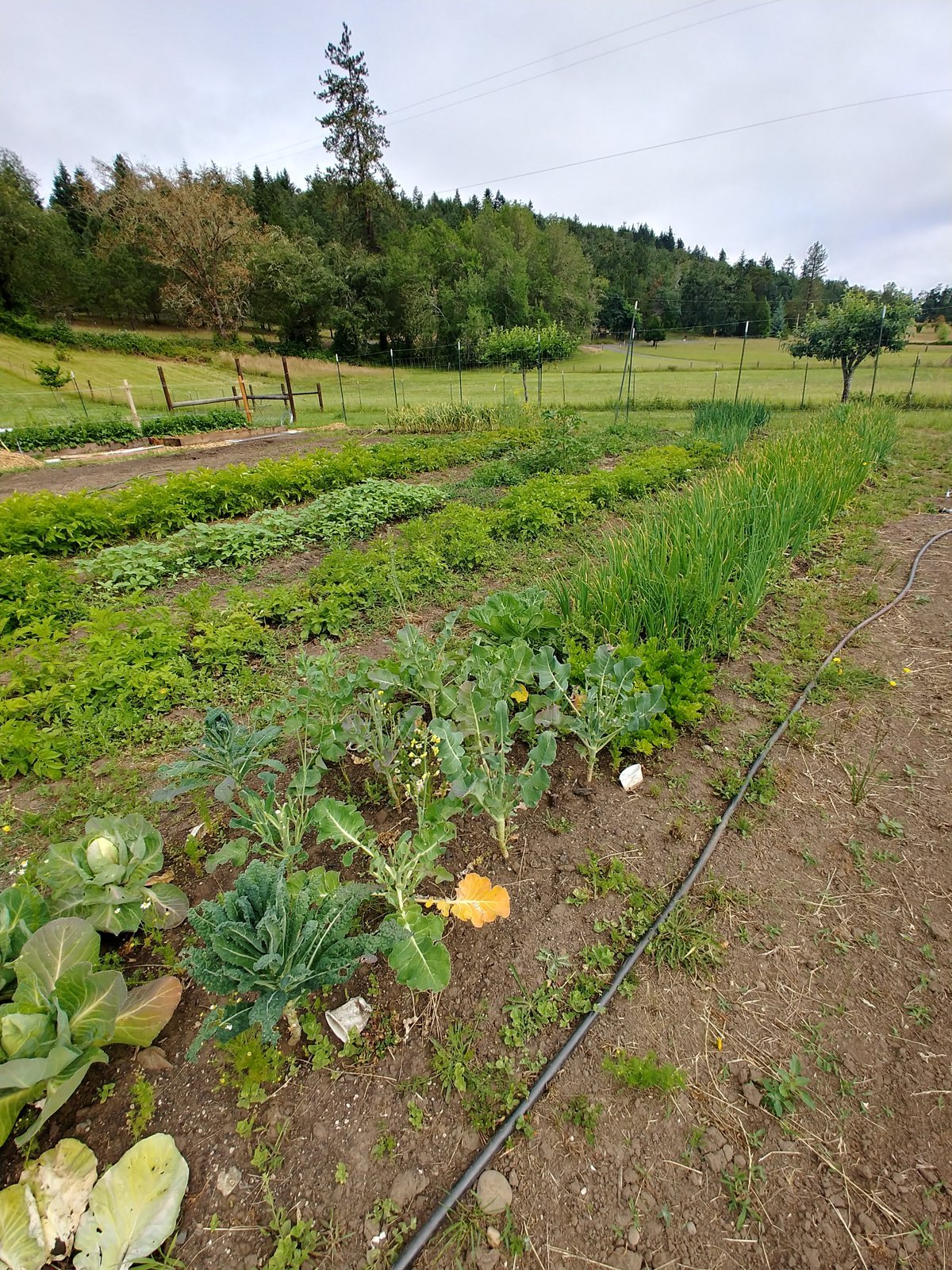
When months 1–6 call for a garden, start with your extension office’s vegetable planting guide and your seed packets. Then the free Garden Planner on our sister site, Start At Home First, is the easy way to lay it out. It asks about where you live, your space and what you eat, then builds a garden plan you can print. It plans the garden only, not the rest of the homestead, and it isn’t perfect, so the extension guide settles any date it disagrees on. For the hands-on version, see How to Plan Your First Garden.
Check it here
- Your town or county zoning and permit office
- Your extension office, which often has small-acreage and beginning-farmer resources
- Your county health department for wells and septic
Skills beside projects
Start At Home First is about skills. AI Homestead is about research, knowledge, organization and ideas. Pair them on purpose. Each season, pick one skill to practice with your hands while AI handles the paperwork: seed starting, basic tool care, reading a seed packet, safe freezing (not canning times from AI), or keeping a simple ledger.
Ask AI for a short reading list from extension and USDA, not from random blogs. Then print the one-pager you will actually use.
Budget without fake precision
If AI invents a “$2,400 first-year budget,” treat it as a template, not a quote. Replace every line with a real price from your feed store, lumber yard or Craigslist. Ask AI to rebuild the sheet from those numbers and check the totals with a calculator. You can’t be self-sufficient on guesswork.
Want AI to tailor it? (optional)
The outline above is enough to get going. If you want a version built around your own land, budget and hours, here’s how to work a chatbot through it. First, know its limits.
Where AI falls short
- It’s optimistic. It doesn’t know how tired you’ll be after work, and it will happily pack your calendar full.
- It doesn’t know your rules. Zoning, animal limits, setbacks, permits and well or septic requirements all vary. It can list questions to ask, but not the answers.
- Costs are guesses. Unless you give it real prices, any budget numbers are placeholders.
Step 1: Tell it the truth about your situation
I have [lot size/acres] in [location]. Existing: [house, shed, well/city water, fencing]. Budget for the year: [amount]. Time: about [hours] per week. Goals: [eggs, vegetables, firewood, etc.]. Experience: [none/some]. Make a month-by-month first-year plan in this order: water, shelter, garden, small animals. Keep it realistic for my time. For each season, give me no more than three projects and a short list of decisions to make.
Step 2: Ask what it left out
What permits, rules or local questions should I check before each of these projects? Give me a list of who to call.
Step 3: Cut it in half
Seriously. Ask: “This is too much. Cut it to the most important half.” Learn one skill at a time. Small wins build momentum.
Step 4: Add a skills track
Alongside the projects, suggest one skill to learn each season, like seed starting, basic carpentry or canning with tested recipes, and the trusted sources to learn it from.
AI brings the knowledge. You build the skill.
Step 5: Plug in real numbers
Get actual quotes and prices, give them to AI, and ask it to update the budget. Then check the math with a calculator.
Print it
Print the plan as a one-page-per-season packet. Pin the current season to the wall. Write on it: what got done, what didn’t, what surprised you. At the end of the year, look back over those notes, or hand them to AI and say, “Here’s what really happened. Help me plan year two.”
[DOWNLOAD PLACEHOLDER: first-year planner, four seasonal pages plus a skills track]
You can’t be self-sufficient without a plan. Start with the outline, then let AI help you fit it to your place.